How Alabye Brands Ensures Consistent Quality Across Every Marketplace
Introduction: Maintaining consistent product quality across Brands marketplace and other marketplaces is a tough challenge for modern brands.
Additionally, different platforms have different listing formats, customer expectations, fulfilment rules, and return behaviours.
Inconsistency anywhere can erode trust, trigger penalties, and drive up returns.
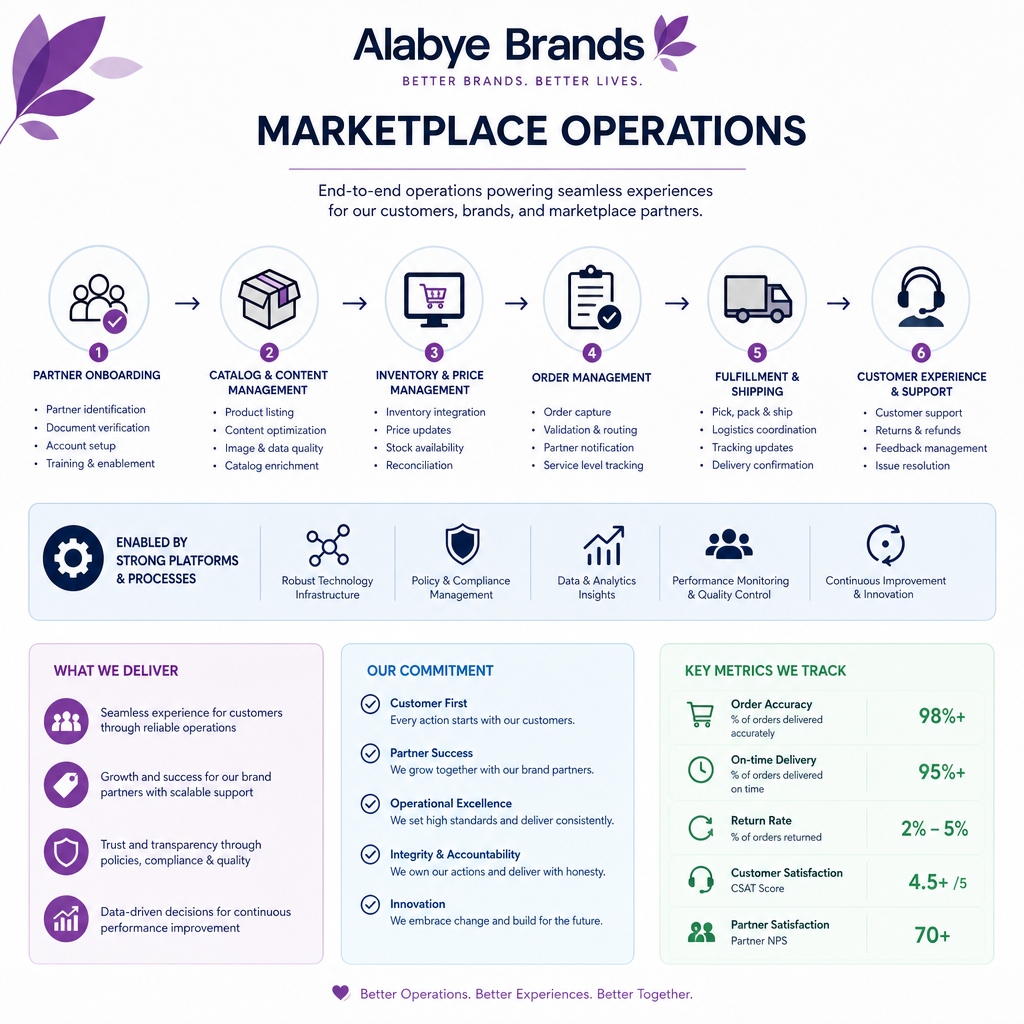
Alabye Brands treats quality as a system, not a checkbox: a measurable process from sourcing to care, in Brands marketplace.
1. Start with Supplier Standards and Traceable Sourcing
Why it matters: Marketplace quality begins before a product exists. If raw materials or manufacturing are inconsistent, no amount of listing polish will save the customer experience.
However, the Alabye approach to Brands marketplace is practical.
- Supplier vetting: Use a standardised scorecard for new suppliers covering capacity, certifications, lead times, and sample pass rates. Require references and production photos for every new SKU.
- Quality agreements: Contractual quality agreements define acceptable tolerances, inspection frequency, and corrective action timelines. These agreements include clear return and remediation clauses tied to marketplace performance metrics.
- Traceability: Maintain batch-level traceability so any defect can be traced back to a production run, raw material lot, or factory shift — enabling fast root-cause analysis and targeted recalls when needed.
2. Rigorous Pre‑Shipment Inspection and Testing
Why it matters: Catching defects before products leave the factory prevents costly returns, negative reviews, and marketplace penalties.
Alabye approach
- Third‑party inspections: Use accredited inspection partners to perform AQL sampling, functional tests, and packaging checks before shipment. Inspection reports are stored centrally and tied to SKU records.
- Functional and safety testing: For relevant categories, run electrical, chemical, or mechanical safety tests to ensure compliance with marketplace and regional regulations. Test certificates are attached to product records for rapid verification.
- Pre‑launch pilot runs: For new SKUs, ship a small pilot batch to a controlled channel to validate real-world performance and gather early feedback before full-scale marketplace roll-out.
3. Unified Product Data and Listing Governance
However, inconsistency in product information across Brands marketplace causes confusion, returns, and suppressed conversions.
Alabye approach
- Centralised PIM: Maintain a single source of truth (PIM) for titles, descriptions, specs, images, and compliance documents. Marketplace feeds are generated from this canonical dataset to avoid drift.
- Listing templates and QA: Use marketplace‑specific templates that map canonical attributes to each platform’s schema. Every listing goes through a QA checklist (image resolution, bullet clarity, spec accuracy, warranty language) before publishing.
- Localisation and compliance: Localise copy, measurements, and regulatory claims per marketplace and region. Ensure claims (e.g., “hypoallergenic,” “BPA‑free”) are backed by documentation to avoid take-downs.
4. Packaging, Fulfilment, and the Unboxing Experience
Why it matters: Packaging protects the product and shapes the customer’s first impression — both critical to perceived quality and repeat purchase behaviour.
Alabye approach
- Durable, rightsized packaging: Design packaging to survive the worst‑case transit scenario for each fulfilment channel. Use protective inserts and test shipments to simulate carrier handling.
- Marketplace-specific fulfilment rules: Align packaging and labelling with each marketplace’s FBA/fulfilment requirements to avoid delays or rejections. Maintain a checklist for barcode placement, polybagging, and prep steps.
- Branding and inserts: Include clear instructions, warranty cards, and a simple returns path. Thoughtful inserts reduce misuse and support requests while encouraging reviews and repeat purchases.
5. Continuous Monitoring: KPIs, Reviews, and Real‑Time Alerts
Why it matters: Quality is dynamic. Monitoring performance lets you catch trends early and act before issues escalate.
Alabye approach
- Core KPIs: Track return rate, defect rate, A‑to‑Z claims, negative review velocity, and buy‑box loss events per SKU and per marketplace. Set automated thresholds that trigger investigations.
- Review mining and sentiment analysis: Use automated tools to surface recurring complaints (e.g., “arrived damaged,” “missing parts”) and route them to product, packaging, or supplier teams for corrective action.
- Real‑time alerts: Integrate marketplace APIs and customer service platforms to generate alerts for spikes in returns or negative feedback so teams can pause listings, adjust inventory, or issue recalls quickly.
6. Root‑Cause Remediation and Continuous Improvement
Why it matters: Fixing symptoms without addressing root causes wastes time and money.
Alabye approach
- Structured RCA process: For any quality incident, run a documented root‑cause analysis with supplier input, inspection data, and customer feedback. Track corrective actions and verify effectiveness with follow-up inspections.
- Supplier scorecards and incentives: Publish performance dashboards for suppliers and tie preferred status or volume to quality metrics. Use corrective action plans and, when necessary, supplier replacement.
- Design for reliability: Feed marketplace feedback into product design cycles to eliminate common failure modes and reduce warranty claims over time.
7. Customer‑First Returns and Warranty Handling
Why it matters: A smooth returns experience preserves brand reputation and converts a negative moment into a loyalty opportunity.
Alabye approach
- Clear, fair policies: Publish easy‑to‑find return and warranty policies tailored to each marketplace’s rules while protecting margins. Provide prepaid return labels where appropriate to reduce friction.
- Fast triage and replacement: Route returns through a triage centre to determine root cause (damage, defect, buyer remorse) and offer replacements or refunds quickly to minimise negative reviews.
- Data capture on returns: Capture photos and notes on returned items to feed back into supplier and packaging improvements.
8. Governance, Training, and Cross-functional Ownership
Why it matters: Quality requires coordination across sourcing, product, operations, listings, and customer service.
Alabye approach
- Quality governance board: A cross‑functional team meets regularly to review KPIs, approve new suppliers, and sign off on corrective actions. Roles and escalation paths are documented.
- Playbooks and training: Maintain playbooks for marketplace launches, inspection protocols, and returns handling. Train marketplace managers and customer service agents on product specifics and common failure modes.
- Continuous audits: Schedule periodic audits of listings, fulfilment partners, and supplier facilities to ensure standards are upheld as scale increases.
Conclusion and Actionable Checklist
Alabye Brands’ approach treats quality as a Brands marketplace end-to-end system.
From supplier testing to listing governance and packaging, it reduces returns and protects marketplace standing.
Moreover, monitoring and remediation support quality across the Brands marketplace chain.